

Written by: Marc Howland, Co-Founder and CEO, Breadless
Key Takeaways
-
Restaurant franchise marketing support blends national brand campaigns with local tools such as advertising funds, digital platforms, and ROI analytics to drive scalable growth.
-
Top-tier systems rely on five core components: national media buying, CRM tools, local marketing kits, grand opening playbooks, and performance dashboards that increase franchisee returns.
-
A 7-step local playbook uses Google visibility, geo-fenced social ads, catering programs, sampling events, and UTM tracking to grow foot traffic and revenue.
-
Breadless sets a clear benchmark with elite marketing infrastructure, chefless operations, B2B catering revenue, national media exposure, and proven ROI advantages over traditional franchises.
-
Ready to access gold-standard marketing support? Explore how Breadless’s marketing infrastructure accelerates your growth and secure your competitive edge in 2026.
How Restaurant Franchise Marketing Support Actually Works
Restaurant franchise marketing support operates on two connected levels that work together to drive customer acquisition and brand recognition. National-level support builds the brand foundation through corporate advertising campaigns, brand guidelines, media buying power, and centralized digital assets that create awareness and credibility across all markets. Local-level support then converts that awareness into visits by giving franchisees co-op advertising funds, grand opening kits, community engagement templates, and location-specific digital marketing tools that connect the national brand to neighborhood needs.
The distinction between basic and elite marketing support tiers becomes clear when you compare fund allocation and ROI tracking capabilities. The table below highlights how higher investment levels pair with more advanced analytics and personalization.
|
Support Tier |
Fund % of Sales |
Key Features |
|---|---|---|
|
Basic |
1-4% |
Standard advertising, basic digital tools |
|
Elite |
4%+ |
ROI tracking, AI personalization, advanced analytics |
AI-driven marketing and omnichannel strategies now sit at the center of QSR franchise growth in 2026, creating personalized experiences across mobile, in-store, and third-party delivery platforms. AI-powered marketing serves as a major force multiplier for franchise systems by speeding up content creation and enabling real-time ad adjustments. These AI capabilities operate within a broader marketing infrastructure that separates elite franchise systems from basic ones.
5 Core Components of Top-Tier Franchise Marketing Support
Elite franchise marketing support systems bring together five connected components that work as one engine to maximize franchisee ROI and operational efficiency.
1. National Advertising Funds and Media Buying
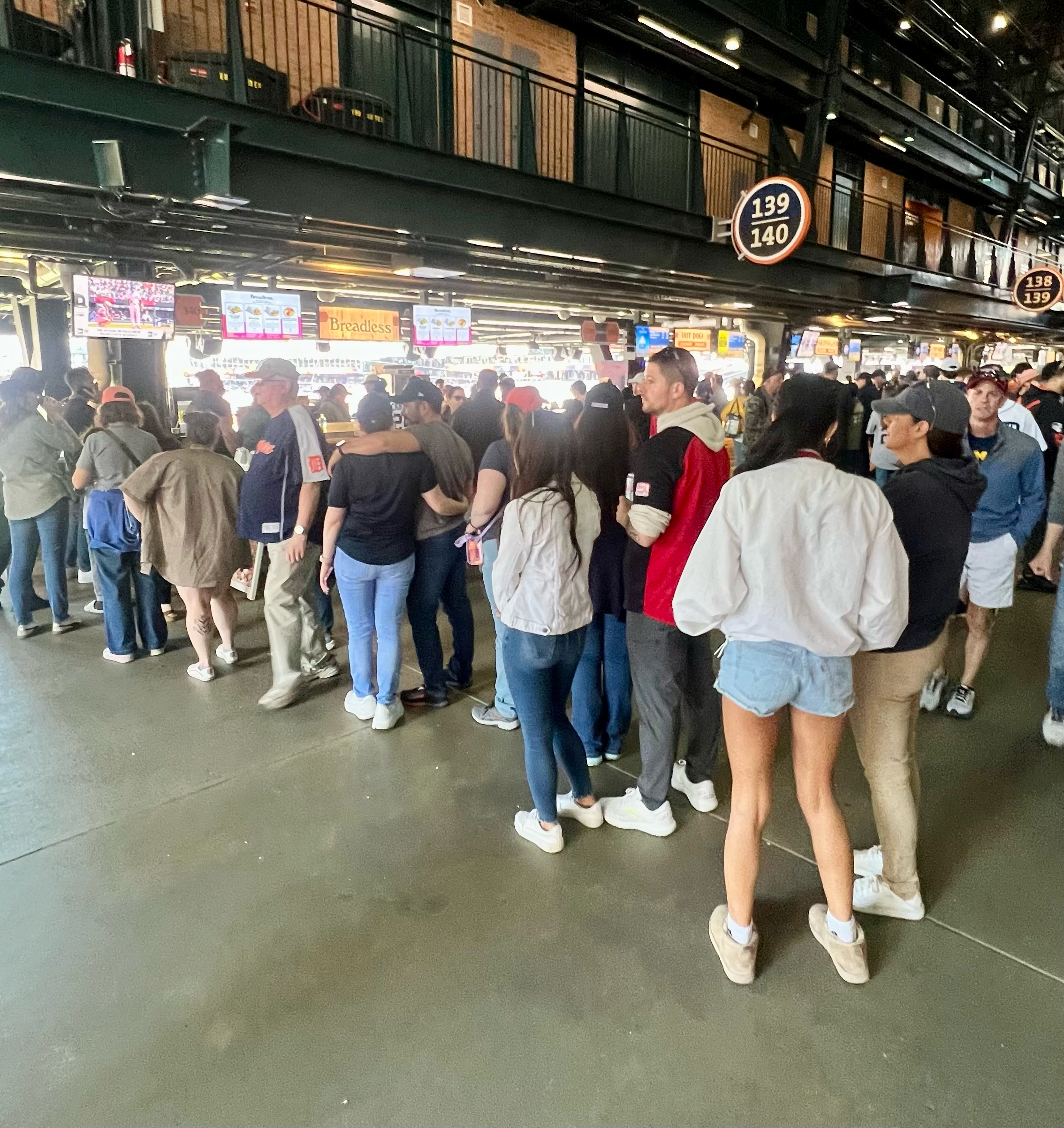
Franchisors typically collect 1-4% of gross revenue for pooled marketing campaigns that create economies of scale in media purchasing and brand development. This pooled investment builds brand awareness at a level individual owners could not afford on their own, yet awareness alone does not guarantee sales.
2. Digital Marketing Platforms and Tools
Digital infrastructure turns that awareness into customer relationships. Customer relationship management (CRM) software ensures unified customer experiences across all locations, while data analytics tools enable performance tracking and improvement across the network. These platforms capture customer data, support repeat visits, and reveal which campaigns actually produce revenue.
3. Local Marketing Kits and Community Engagement
Local marketing kits translate national strategy into neighborhood action. Comprehensive resources include customizable flyers, event planning guides, and geo-targeted advertising templates that protect brand consistency while allowing community-specific messaging. This connection between national creative and local execution keeps campaigns on-brand and relevant.
4. Grand Opening Playbooks and Launch Support
Grand opening playbooks turn a new store launch into a structured campaign instead of a one-day event. Coordinated sampling events, promotional offers, and community outreach initiatives can produce strong traffic spikes during launch periods and set the tone for ongoing local engagement.
5. Analytics Dashboards and ROI Measurement
Analytics dashboards close the loop by showing what works. Advanced tracking systems monitor customer acquisition costs, lifetime value metrics, and campaign performance across all marketing channels. These insights guide smarter spending decisions and help franchisees double down on the tactics that deliver the highest returns.
What are the 4 P’s of franchising? Product standardization, competitive pricing strategies, strategic place selection, and comprehensive promotion through franchisor marketing tools form the foundation of successful franchise operations.
Franchisee Evaluation Checklist:
-
Percentage of sales allocated to local marketing funds
-
Availability and frequency of updated digital marketing templates
-
Level of franchisor grand opening support and training
-
Inclusion of ROI tracking tools within the marketing package
-
Speed of approval and launch for local campaigns
How to Promote Your Franchise: 7-Step Local Playbook
Once you confirm that a franchise system offers these five core components, the next step is using them to win in your local market. This 7-step playbook shows how to combine franchisor resources with local execution to build traffic and revenue.
Step 1: Execute Franchisor Grand Opening Programs
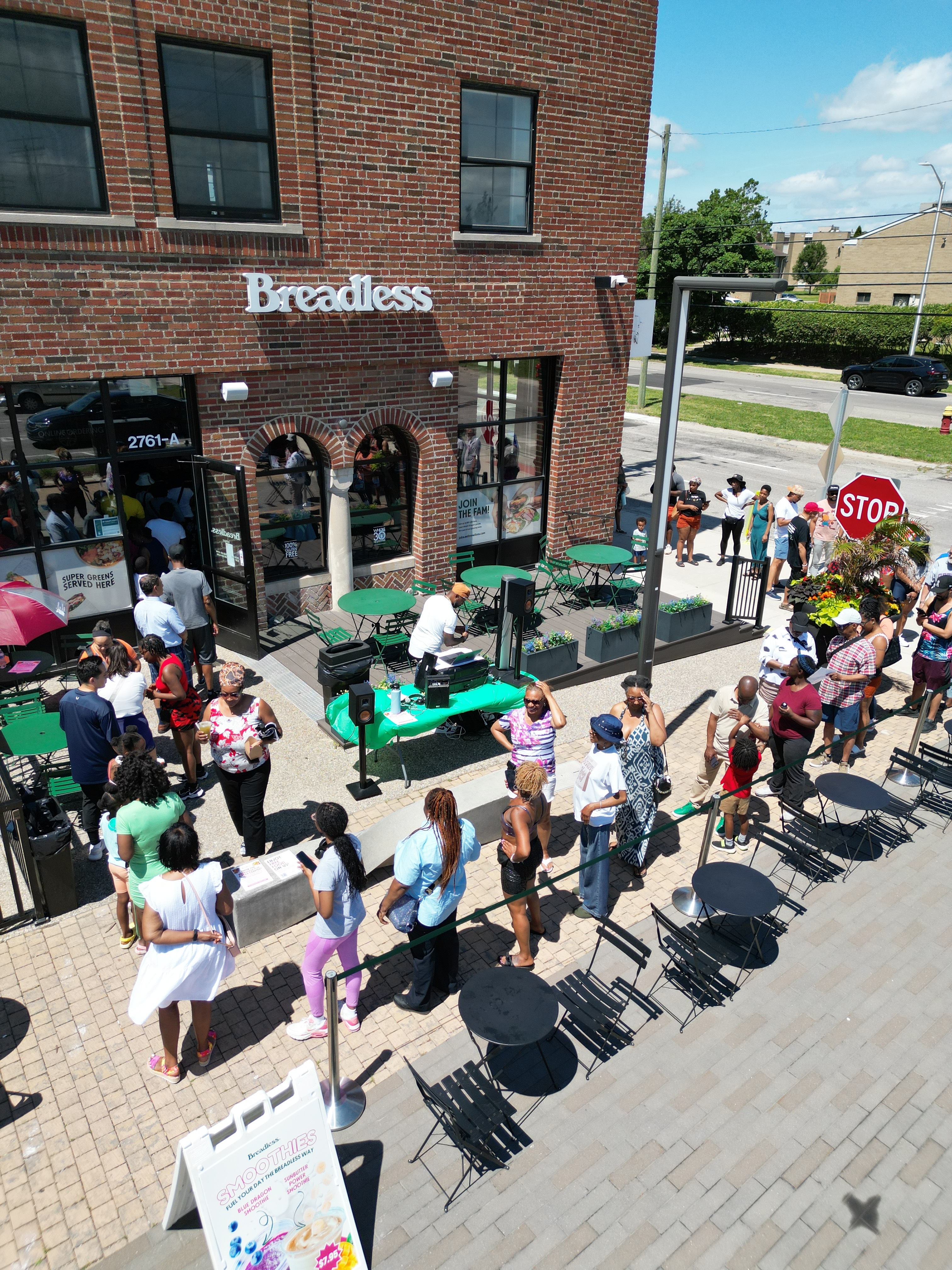
Grand opening programs create early momentum when supported by coordinated sampling and promotional activities. Franchisees who follow the playbook closely often see faster awareness and stronger first-month sales.
Step 2: Optimize Google Business Profile
Local SEO represents the highest-ROI digital channel for most franchise systems. Strong performance requires consistent NAP information, high-quality photos, accurate categories, and a regular posting schedule that keeps the profile active.
Step 3: Implement Geo-Fenced Social Media Campaigns
Geo-fenced social campaigns reach customers within a defined radius around the restaurant. Targeting based on demographics and behavior increases local market penetration and drives nearby customers into the store.
Step 4: Develop Corporate Catering Programs
Corporate catering programs add a recurring B2B revenue stream. Health-focused concepts like Breadless can position catering as a productivity tool for employers that want to reduce time lost to off-site lunches.
Step 5: Execute Strategic Sampling Events
Sampling events at high-traffic locations introduce the menu to new audiences. These events build brand awareness, encourage trial among target demographics, and often generate immediate visits or catering inquiries.
Step 6: Deploy Co-op Direct Mail Campaigns
Co-op direct mail campaigns spread costs across neighboring businesses or nearby franchise locations. Shared mailers expand geographic coverage while keeping per-location expenses manageable.
Step 7: Implement UTM Tracking and Analytics
UTM tracking connects each campaign to measurable results. Unique tracking codes reveal which channels drive visits and orders, which allows franchisees to refine budgets and improve future campaign performance.
Franchise Marketing Funds and Budget Benchmarks
Clear benchmarks for marketing fund contributions help franchisees judge whether a system invests enough to support growth. Most franchise systems fund marketing via these brand-level contributions and local marketing requirements, which together create a substantial total marketing budget.
Email marketing often delivers the strongest financial return, generating $36 to $42 in revenue for every dollar invested. At the same time, Harvard Business School research using Yelp data shows that a one-star rating increase drives a 5-9% revenue lift for restaurants, a principle that applies to Google ratings for local businesses.
The comparison below focuses on Breadless and Tropical Smoothie to illustrate how different marketing structures affect ROI and positioning. Breadless emphasizes co-op support and catering-driven revenue, while Tropical Smoothie follows a more traditional percentage-of-sales model.
|
Franchise Brand |
Marketing Fund % |
ROI Features |
Specialization |
|---|---|---|---|
|
Breadless |
Co-op + catering support |
B2B revenue potential and strong ROI |
Health-focused, chefless operations |
|
Standard digital tools |
Smoothies and light food |
Franchise systems that balance brand consistency with strong local connections often outperform purely local efforts. Centralized campaigns build recognition, while local initiatives convert that recognition into steady revenue.
Breadless: Restaurant Franchise Marketing Built for Modern Growth
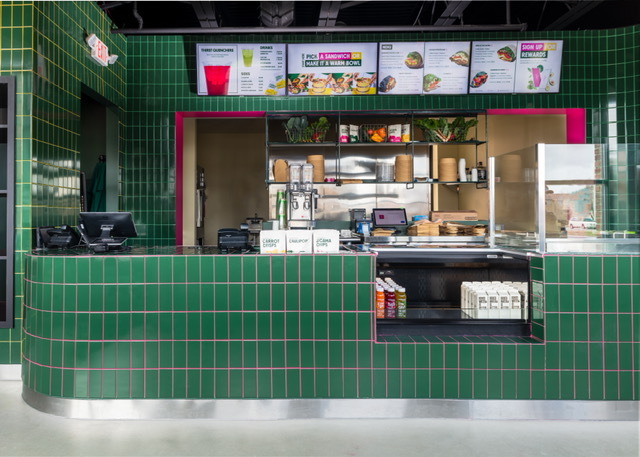
Breadless exemplifies elite restaurant franchise marketing support through a comprehensive, ROI-focused approach tailored to modern operators. The marketing infrastructure includes national media placements in Forbes, CBS News, and FOX that build brand credibility, while the chefless operational model supports clear messaging for busy professionals, athletes, and health-conscious consumers.
The catering program stands out as a major revenue driver by positioning Breadless as a productivity solution for corporate clients. The concept addresses the 1.5-hour daily “time leak” companies experience from lunch-related disruptions, creating a data-backed value story that elevates catering from a perk to an operational tool.
Key marketing advantages work together as a complete system:
-
National media validation that strengthens brand authority and trust
-
Chefless operations that support simple, distinctive promotional messaging
-
Open territories that offer first-mover advantages in attractive markets
-
B2B catering that generates significant recurring revenue
-
SEO-optimized digital assets and location pages that improve online discovery
-
Grand opening support that shortens the path to profitability
This operational simplicity creates direct marketing advantages. The Director of Operations, who previously opened over 100 locations for Chipotle, Taco Bell, and Popeyes, confirms that “Breadless is the easiest concept to operate of all of them by far”. This ease of operation allows franchisees to focus more time and budget on marketing execution instead of kitchen complexity, while the 50+ qualified applicant waitlist signals strong market demand for the franchise opportunity.
|
Marketing Feature |
Breadless |
Traditional Franchises |
Competitive Advantage |
|---|---|---|---|
|
Operational Messaging |
Chefless, health-focused |
Standard food service |
Unique positioning for professionals |
|
Target Market |
High-performers, athletes, busy parents |
General consumers |
Premium demographic alignment |
|
Revenue Diversification |
Significant B2B catering |
Primarily retail |
Recurring corporate contracts |
Learn more about Breadless franchise opportunities to access this proven marketing infrastructure.
Checklist: Evaluate Restaurant Franchise Marketing Support
Use this focused checklist to compare franchise marketing support across brands.
-
Fund Allocation: Clear marketing investment with transparent ROI tracking
-
Digital Infrastructure: CRM systems, automated email marketing, and analytics dashboards
-
Local Support: Customizable templates and fast approval processes
-
Grand Opening: Structured support with potential for strong traffic lifts
-
Training Programs: Ongoing education and best practice sharing
-
Brand Consistency: Clear guidelines with room for local customization
-
Performance Metrics: Regular reporting and benchmarking against system averages
-
Innovation Pipeline: AI integration and adoption of emerging technology
Breadless scores 10 out of 10 across these criteria and sets the benchmark for elite franchise marketing support in the health-focused fast-casual segment.
Elite restaurant franchise marketing support acts as a powerful ROI multiplier for scalable growth by combining national brand power with local execution tools. Breadless represents the gold standard in this space, solving operational complexity while delivering turnkey marketing infrastructure for health-forward success.
Start your application to access this proven marketing system and secure your competitive advantage.
Frequently Asked Questions
What percentage of sales should franchisees expect to contribute to marketing funds?
Most successful restaurant franchises require marketing contributions split between national advertising funds and local marketing requirements. Elite franchise systems pair these contributions with comprehensive ROI tracking and proven results that justify the investment. Franchisees should look for transparency in fund allocation and clear, measurable returns on marketing spend.
How quickly can new franchisees expect to see results from grand opening marketing campaigns?
Well-executed grand opening campaigns often generate noticeable traffic increases during the initial operating period. The strongest programs combine franchisor-provided marketing materials with local community engagement, sampling events, and targeted digital advertising. Breadless supports quick ramp-up through effective grand opening playbooks and the operational simplicity of the chefless kitchen model.
What digital marketing tools should franchisees expect from their franchisor?
Top-tier franchise systems provide a comprehensive digital marketing infrastructure that includes CRM software for customer relationship management, automated email marketing platforms, social media templates and scheduling tools, local SEO optimization, Google Business Profile management, and analytics dashboards for performance tracking. Advanced systems also offer AI-powered personalization tools, review management systems, and mobile app integration for loyalty programs and ordering.
How do franchise marketing funds compare to independent restaurant marketing budgets?
Franchise marketing funds create economies of scale that independent restaurants rarely match. Independent operators are often advised to allocate 3-6% of revenue to marketing with limited reach, while franchise systems pool contributions to afford national media buys, professional creative development, and sophisticated digital platforms. This collective approach usually delivers stronger results than purely local marketing efforts and provides franchisees with proven templates and strategies.
What makes Breadless marketing support superior to other restaurant franchises?
Breadless combines national brand validation through the major media coverage mentioned earlier with operational advantages that create natural marketing opportunities. The chefless kitchen model appeals to efficiency-focused professionals, while the health positioning aligns with strong consumer trends. The catering program generates recurring revenue through B2B contracts, creating revenue streams that many restaurant franchises cannot match. In addition, the 50+ qualified applicant waitlist demonstrates strong market demand and brand momentum.
